AI in practice
Do you have to fix your data first? I spent years being the person who said yes
“Our data is not ready” bundles several problems together. Why you can start with one decision on today's data, and where the cleanup crowd are right.
· 21 Oct 2026 · 6 min read
You can start using AI before your data is clean, provided you begin with one specific decision and test it against the systems you run today. Cleaning everything first can cost a year before anyone gets an answer.
There is a moment in most AI or analytics kick-offs where somebody says “we should sort the data out first”, and the room relaxes. It is a responsible sentence. It buys time and sounds like rigour. I have never once seen anyone lose an argument by saying it, and I said it for years, meaning it every time. If you own the strategy rather than the systems, that sentence arrives at you as a verdict, delivered by people who know more about the plumbing than you do.
What does “our data is not ready” actually mean?
It usually means three or four separate problems bundled into one sentence, and the bundling is what costs you the year. Some of it is ordinary mess. Duplicate records that stay duplicated because merging them needs a sign-off. A lead-source picklist that had grown to 41 options over six years, twelve of which were spelling variants of “webinar”. The easy part is that one person with a mandate can fix all of it in a fortnight.
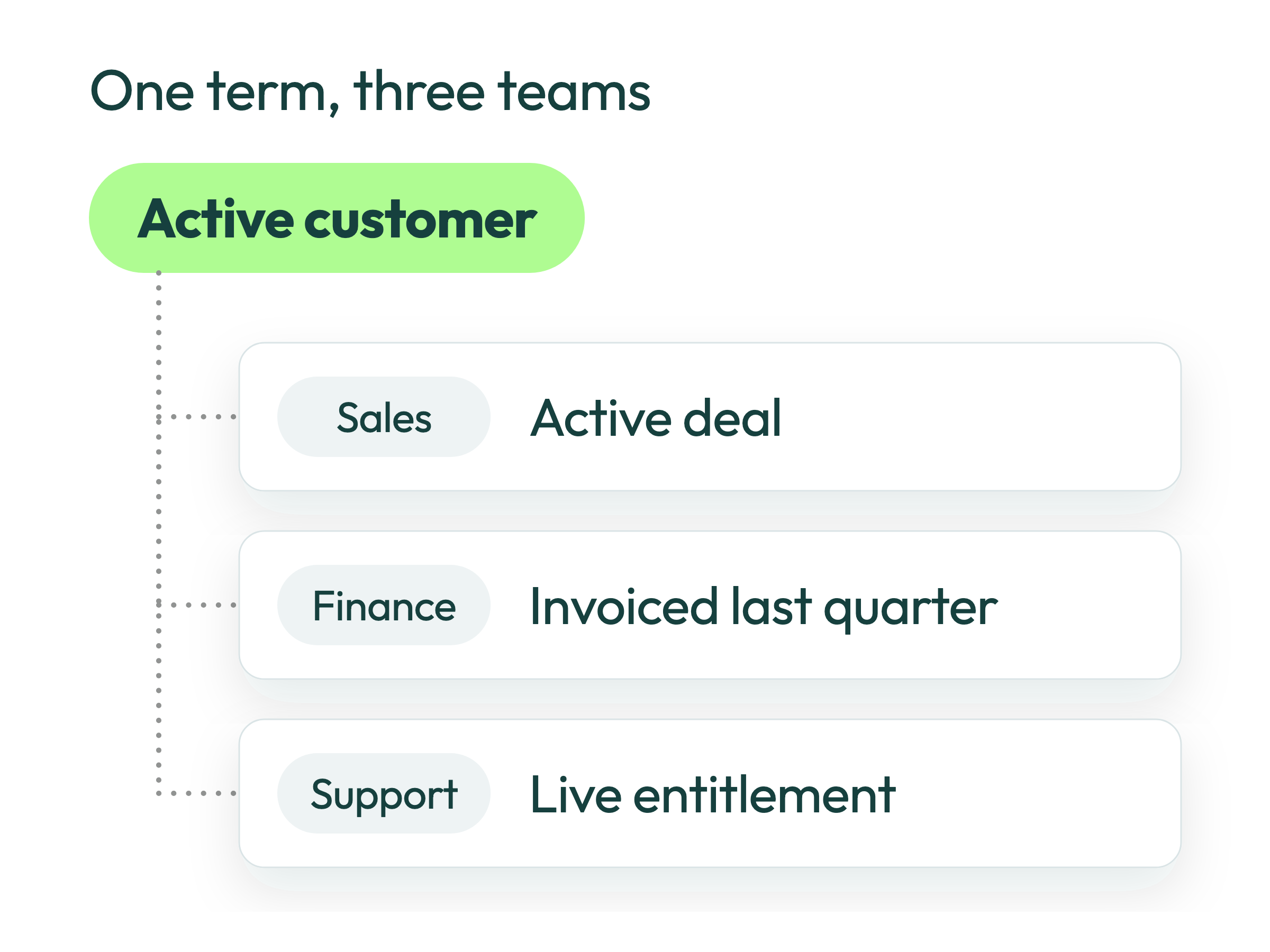
The rest is harder. Leadership teams want one truth, based on one definition, yet “active customer” has several definitions depending on which team you ask. Sales might count anyone with an active deal. Finance counts everyone it invoiced in the last quarter. And then there is support, who count anyone with a live entitlement. Each definition is correct inside the system that produces it, and each has been correct for years. The disagreement only surfaces the week somebody tries to build a single number on top of all three.
That is how a deduplication project becomes a governance project. You start by merging records. You finish in a room deciding what your company means by a customer, which was never on the project plan.
About 14% of the businesses we spoke to over the past year raised this question, more than any other. The sample is small, and on those calls “not ready” meant three different things. A food retailer could only get at its sales data, which is a real timing problem and a fair reason to wait. A financial services firm had nobody who clearly owned the data or the systems behind it. A charity and a site-based operator both had plenty of data that had never been put together in one place, and the operator’s inputs disagreed with each other.
Ward Cunningham’s original 1992 argument about technical debt mostly gets lost now the phrase is everywhere: borrowing is a reasonable way to move quickly, provided you know you are carrying the debt and you service it. The failure is not the borrowing. It is finding out the balance in the same week you need the answer. Data debt behaves the same way, and every company I have worked in was carrying some.
Why did I keep saying “we need the data sorted first”, then?
Because it is true, and because it is safe. “The data is not ready” is close to unarguable, and it moves a deadline without anybody having to own the decision to move it, which means you can get teams aligned faster. Operations teams find that a comfortable place to stand, and I have stood there, hoping this would be the month we actually got half-decent reporting ready, with definitions shared across the whole business.
On one of those projects the data was in reasonable shape about eleven months in. By then the sponsor had left and the campaign it had been for was shelved. The person who inherited it opened a fresh audit, because he had not been in the room for the first one.
What changes if you do not wait?
Mostly, what changes is the order of operations. You take one question that matters and answer it properly against the systems as they stand today, while the estate-wide cleanup carries on at its own pace behind that. When our engineering team built an AI coaching service for ICE Creates, the raw material was audio files and Word documents in SharePoint, with no ingestion pipeline and no transformation logic or quality controls, and the data platform was built inside that project, for that one service.
That is the part of Unloq I would have wanted when I was doing this work. Unloq connects to the systems you already run and resolves definitions consistently across every system a question touches, so the answer to “how many active customers do we have” does not change depending on where it was routed. Every answer carries its evidence trail, and a validation gate grades each figure pass, warn or block before it reaches anyone. Unloq would rather show nothing than a confident wrong answer. Your data stays where you choose: in your own cloud, or hosted securely in ours. Unloq reads the data you approve and does not change or delete it.
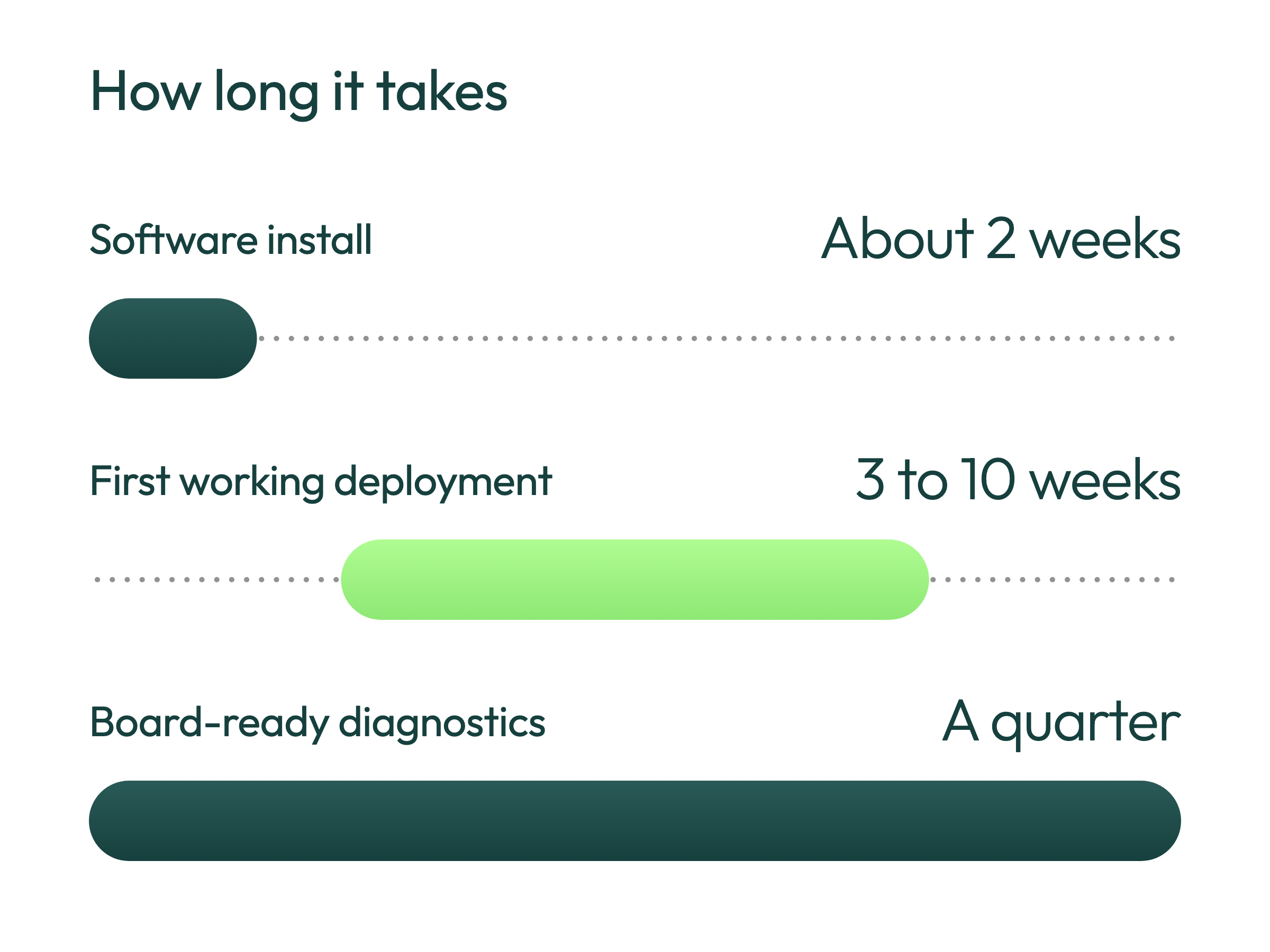
The timescales are unremarkable, which I think is a point in their favour. The software installs in about two weeks. Onboarding to a first working deployment runs three to ten weeks depending on scope, and diagnostics you would be willing to take into a board meeting build over a quarter.
Where the cleanup crowd are still right
Bad data stays expensive: attribution goes wrong, and decisions get made on instinct because nobody trusts the report. None of that gets fixed by answering one question well; the underlying work still has to happen, with funding and an owner, on its own timeline.
Rhonda Griscti, executive director of digital strategy and global process lead at Bristol Myers Squibb, told CFO Dive in June that “if you wait for perfect data, you’ll never get started”, and added that people argue with her about it at conferences. I am mostly on her side. Her team’s version was “getting our data right as we go along”, which only works if somebody has been told the going along is their job.
And I cannot give you a rule for where the line sits. I have seen organisations where the mess was bad enough that starting anywhere at all would have produced confident nonsense, and I did not know they were in that category until we tried. Anyone who tells you they can spot it from the outside is selling you an audit.
The smallest useful test
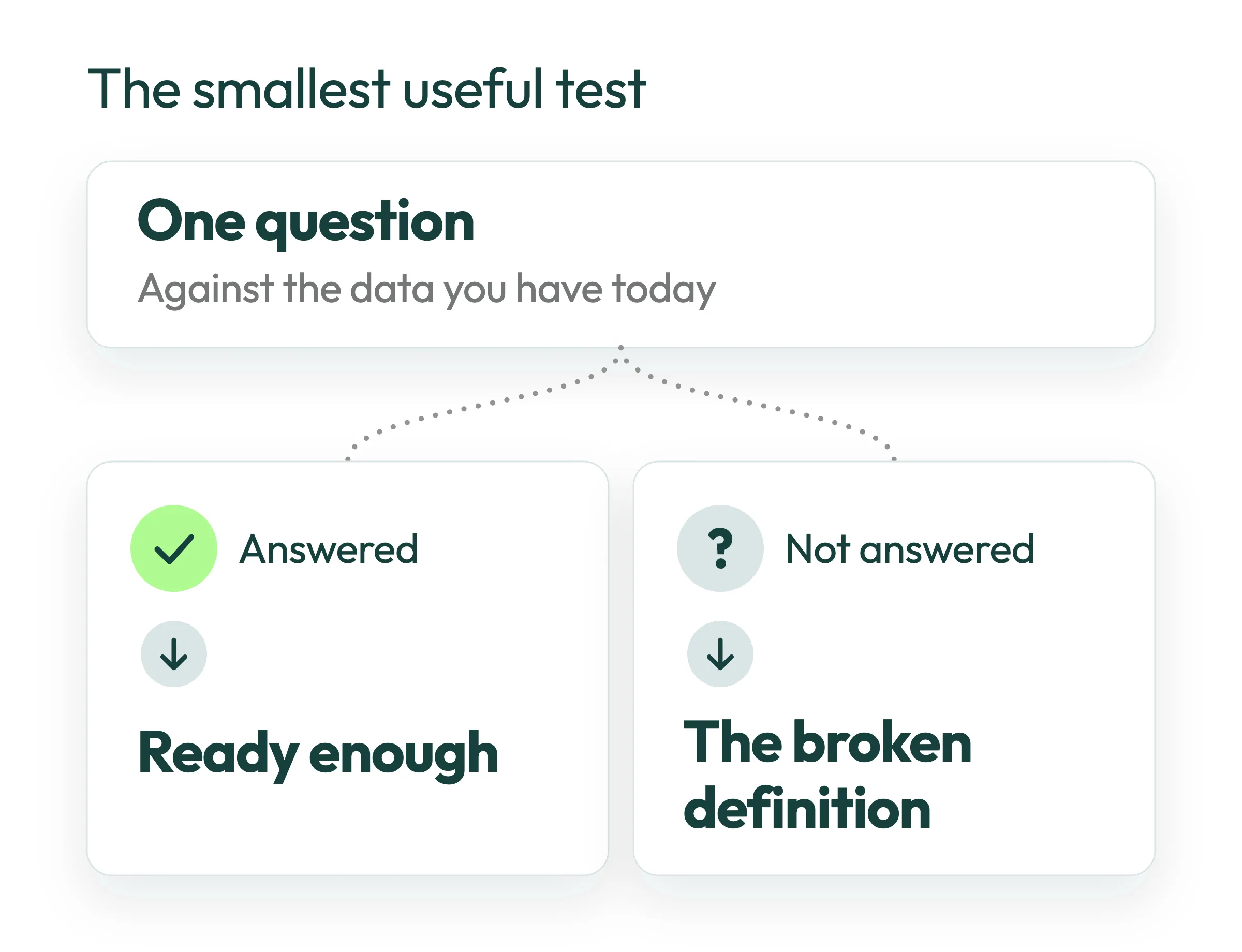
Pick one question your leadership team cannot currently answer without three people exporting spreadsheets, and see whether it can be answered properly, with its working attached, against the data you have today. If it can, your data was ready enough. If it cannot, you will at least come out knowing which definition is broken, and that is a much shorter list than “fix the data”.
Bring us one decision that matters and we will use it as the test.

Written by
Founding Growth & Marketing Lead, Unloq
Eerik is a growth and marketing leader who has built the marketing function at several B2B software companies, across AI, fintech and SaaS. He is an operator who builds demand engines from zero. He writes about AI-led growth and marketing, and how companies put AI to work.
Questions we get asked
Got a question about this?
Send it to us and one of the team will come back to you with an answer.
Ask a question